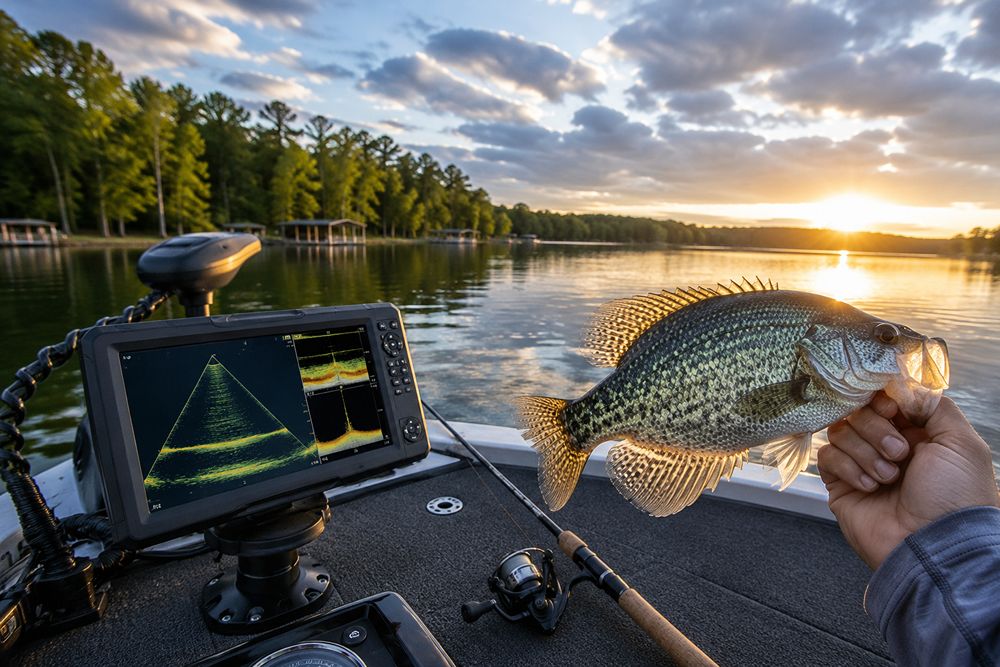
Forward-facing sonar has changed the way many anglers locate and target crappie. It can display fish, bait, underwater cover and lure movement in real time, helping anglers understand what is happening ahead of the boat.
But do you actually need it for Lake Greenwood Crappie Fishing?
No. Forward-facing sonar can help you locate fish more efficiently, but it is not essential. Anglers have successfully caught crappie on Lake Greenwood for years using traditional electronics, seasonal knowledge and careful presentations.
What Does Forward-Facing Sonar Show?
Traditional sonar usually displays what is directly beneath the boat. Forward-facing sonar scans the water ahead, allowing anglers to identify fish before passing over them.
This can be especially helpful when Crappie in Lake Greenwood are suspended above brush, positioned beside underwater cover or following baitfish through open water.
Forward-facing sonar may help anglers:
- Locate isolated fish away from visible structure
- See how crappie respond to a jig or minnow
- Keep bait at the same depth as the fish
- Distinguish fish from brush or other cover
- Reduce time spent casting into unproductive water
The technology does not make crappie bite. It simply helps anglers place their bait closer to fish.
When Does Forward-Facing Sonar Help Most?
Lake Greenwood covers approximately 11,400 acres and has more than 200 miles of shoreline. With such a large area to explore, electronics can reduce the amount of time spent searching.
The greatest advantage usually appears when crappie are not holding in predictable shallow areas.
When Crappie Are Roaming in Open Water
Crappie sometimes leave fixed structure and follow schools of baitfish. These fish can move quickly and may be difficult to track using visible landmarks alone.
Forward-facing sonar allows anglers to scan ahead and follow moving schools without repeatedly driving over them. To understand how this pattern compares with fishing fixed cover, read Are Lake Greenwood Crappie Better Around Brush Piles or Open Water?
When Fish Are Holding on Deep Brush
During warmer weather, crappie often move toward deeper brush piles, channel edges and submerged structure.
Sonar can reveal whether the fish are holding above the brush, buried inside it or suspended nearby. This helps anglers choose a better casting angle and place the bait at the right depth.
Can You Catch Crappie Without Forward-Facing Sonar?
Absolutely. Not owning advanced electronics should not prevent you from enjoying a Lake Greenwood Fishing Trip.
Traditional fishing methods remain productive when anglers understand where crappie are likely to be and take time to work each area carefully.
Start With Known Fish Attractors
A traditional depth finder can help you identify the depth and position of the structure. Once located, you can cast across it or fish vertically above it.
Follow Seasonal Fish Movement
Fall and winter movements can also depend on baitfish location and changing water conditions. The article What is the Best Month to Catch Crappie Fishing in Lake Greenwood? can help anglers decide when and where to focus their efforts.
Fish Docks and Visible Cover Carefully
Fish each area at several depths before moving. Crappie may be present but positioned deeper or shallower than expected.
Look for Repeatable Patterns
Once you identify a pattern, search for other areas with similar conditions. For a broader explanation of proven techniques, visit How Do You Catch Crappie Fishing in Lake Greenwood?
Does Forward-Facing Sonar Guarantee More Fish?
No. Sonar can show anglers where fish are, but it cannot make inactive crappie feed.
Some anglers spend too much time watching the screen and not enough time adjusting their presentation. Others chase individual fish while overlooking a more active school nearby.
Boat position, casting accuracy, bait depth and presentation speed still influence whether a crappie strikes.
A knowledgeable Lake Greenwood Crappie Fishing Guide uses sonar alongside experience rather than relying on the screen alone.
What Equipment Does a Beginner Need?
A beginner does not need an expensive electronics system to enjoy Crappie Fishing in Lake Greenwood.
A useful starter setup may include:
- A standard depth finder
- A GPS unit or lake map
- Light spinning rods and reels
- Small crappie jigs
- Live minnows where permitted
- A measuring board
- A fish counter
- Required boating safety equipment
Choosing the right bait and placing it at the correct depth often matters more than having the newest equipment. Anglers unsure about their starting presentation can read What’s the Best Bait for Crappie in Lake Greenwood?
Is Forward-Facing Sonar Legal on Lake Greenwood?
Current South Carolina regulations for Lake Greenwood do not list a recreational prohibition on forward-facing sonar.
Anglers must still hold the appropriate South Carolina fishing license and comply with all applicable size, creel and boating regulations. Lake Greenwood is located in South Carolina, so Georgia fishing laws do not govern fishing on this lake.
Because fishing regulations can change, anglers should review the latest South Carolina Department of Natural Resources information before each trip.
Is Forward-Facing Sonar Worth Buying?
The answer depends on how often and how you fish.
It may be useful for anglers who regularly target:
- Suspended open-water crappie
- Deep brush piles
- Isolated underwater cover
- Moving schools of baitfish
- Fish requiring precise lure placement
Occasional anglers and first-time visitors may benefit more from learning seasonal patterns, boat control and basic electronics before investing in advanced sonar.
Conclusion
Seasonal knowledge, accurate bait placement and patience remain just as important. To experience a guided outing built around current lake conditions and proven crappie patterns, plan your next adventure with Lake Greenwood Fishing Guides.