
Summer changes more than just the air temperature around Lake Greenwood. As surface water warms, the lake can develop a thermocline a layer separating warmer surface water from cooler, deeper water.
For anglers Fishing in Lake Greenwood, understanding this layer can make a major difference. Fish may stop using areas that produced well in spring, while other depths suddenly become more productive.
Lake Greenwood is approximately 11,400 acres with an average depth of about 21.8 feet and a maximum depth near 69 feet, so summer water conditions can vary significantly across the reservoir.
What Exactly Is a Thermocline?
A thermocline forms when warm surface water becomes separated from colder water below. Between those layers is an area where water temperature drops relatively quickly with depth.
Temperature is only part of the story. Oxygen levels can also decline below the thermocline during summer.
Historical SCDNR research on Lake Greenwood has documented seasonal oxygen depletion below the thermocline, creating low-oxygen bottom water during summer and into fall.
That means deeper does not automatically mean better during July or August.
Why Fish Can Seem to “Disappear” in Summer
A spot may look perfect on your fish finder but still produce very few bites.
One reason is that fish have to balance two needs: comfortable water temperature and enough dissolved oxygen. When deep water becomes oxygen-poor, many species move higher in the water column or concentrate around depths that offer both suitable temperature and oxygen.
This can compress fish into a relatively narrow band.
Instead of fishing every depth from the surface to the bottom, anglers on Lake Greenwood Fishing Trips may have better results identifying the active depth zone and concentrating their effort there.
Crappie Often Reveal the Pattern Clearly
Crappie are a good example of how summer positioning changes.
Current SCDNR fishing trends for Lake Greenwood note that crappie can remain around deeper brush on the main channel and near creek mouths during the late-summer period.
However, “deep brush” does not necessarily mean crappie are sitting on the lake bottom. Fish may suspend above the cover where oxygen conditions are better.
That is why depth control becomes so important. Anglers who want more background on seasonal crappie locations can read Are Lake Greenwood Crappie Better Around Brush Piles or Open Water?
Bass May Move Vertically Throughout the Day
Largemouth bass can also react to changing summer conditions.
During low-light periods, some bass may move shallower to feed around docks, points, shoreline cover, and baitfish. As sunlight and water temperatures increase, they can shift toward deeper structure or suspend near the most comfortable water layer.
This does not mean every bass follows the same pattern.
Shade, current, wind, baitfish location, and nearby structure can all influence where fish hold. The article What Lures Work Best for Bass Fishing in Lake Greenwood? can help readers match presentations to those changing summer locations.
Your Fish Finder Can Help Identify the Thermocline
You do not need expensive electronics to recognize summer stratification.
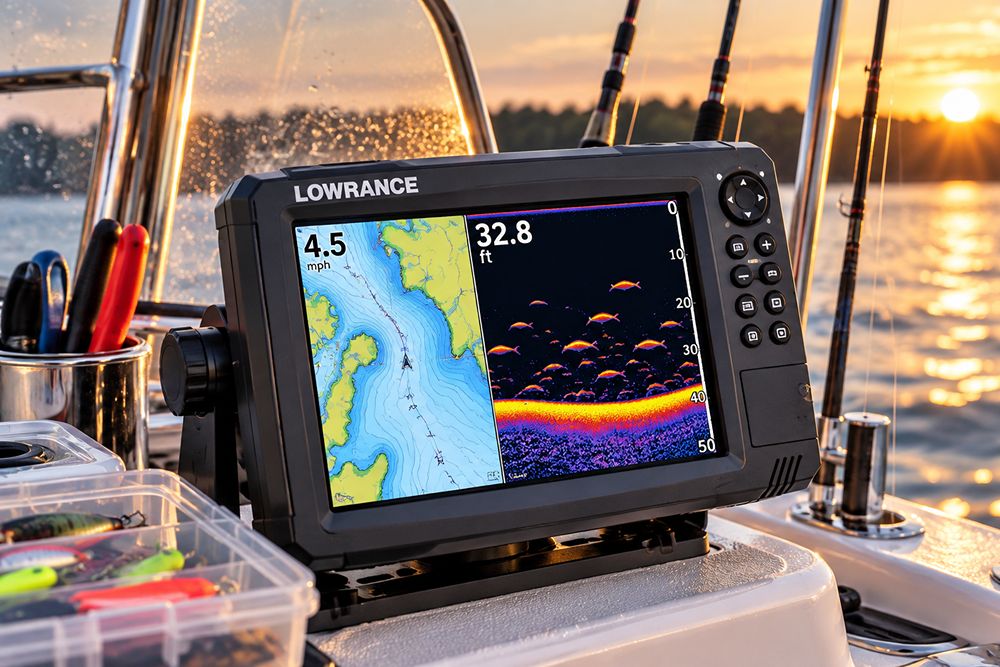
On many sonar units, the thermocline can appear as a faint horizontal band across the screen. Small particles and microorganisms often concentrate around the boundary, creating a visible line or hazy layer.
More importantly, watch where fish consistently appear.
If nearly every fish mark is above a similar depth even when you move between different parts of the lake you may have identified the productive zone.
Lake Greenwood Fishing Reports can provide another useful clue because they show how fish locations change as summer progresses.
Should You Fish Below the Thermocline?
Usually, spending long periods well below an established thermocline is not the most efficient strategy for many gamefish.
Lake Greenwood has historically experienced summer dissolved-oxygen depletion in deeper water.
Instead, try fishing:
- Just above the thermocline
- Brush that reaches into oxygenated water
- Points intersecting the productive depth
- Channel edges near baitfish
- Deeper docks with shade
- Creek mouths with nearby depth changes
Small changes matter. A lure fishing five feet below active fish may receive far fewer strikes than one presented directly at their level.
Does the Thermocline Stay at One Depth All Summer?
No. Its depth and strength can change with weather, water movement, temperature, inflow, and seasonal progression.
Heavy wind or significant weather can mix portions of the water column. As fall approaches and surface water cools, stratification eventually weakens and the lake begins mixing more completely.
That transition can change fish behavior quickly.
Visitors unfamiliar with the reservoir may find Comprehensive Fishing Guide for Lake Greenwood: Key Seasons, Prime Spots, and Target Species helpful when comparing summer patterns with the rest of the year.
What Should First-Time Summer Anglers Do?
Avoid choosing a fishing depth only because it worked during spring.
Start by locating baitfish and observing where your electronics show the highest concentration of fish. Then match your lure or bait depth to that zone.
Early mornings can also offer more opportunities around shallower structure before heat and bright sunlight push fish toward deeper or shaded areas.
Anyone preparing for a first Lake Greenwood Fishing Guide Tour can also review Planning Your First Lake Greenwood Fishing Trip: What You Need to Know for practical preparation before launching.
South Carolina fishing regulations continue to apply regardless of where fish are positioned. Lake Greenwood also has specific rules, including a 14-inch minimum total length for largemouth bass that are kept.
Conclusion
For anglers who want help reading seasonal conditions and locating productive summer depths, Lake Greenwood Fishing Guides can provide Guided Fishing Trips in Lake Greenwood based on the patterns developing on the lake at the time of your visit.