If you are planning a trip and asking, “What’s biting on Lake Greenwood right now?”, you are not alone. Most anglers want the same things:
- What species are active
- What bait to bring
- Where to start looking
- What rules matter if you plan to keep fish
This post keeps it simple and practical, with a quick legal check-in based on South Carolina rules for Lake Greenwood.
Quick rules check (Lake Greenwood, SC)
Before we talk bites, here are two regulations that come up a lot:
- Largemouth bass: On Lake Greenwood, no largemouth bass under 14 inches (total length) may be kept.
- Striped bass: There is a closed season on striped bass on Lake Greenwood, and possession “on or immediately adjacent” to the lake is unlawful.
For a full rule breakdown (including gear rules, limits, and reminders), your internal post Fishing Regulations in Lake Greenwood: What Every Angler Must Know is the best fit to link early.
The “Bite Board” by season (what usually bites when)
Spring (March to May): the busiest season for variety
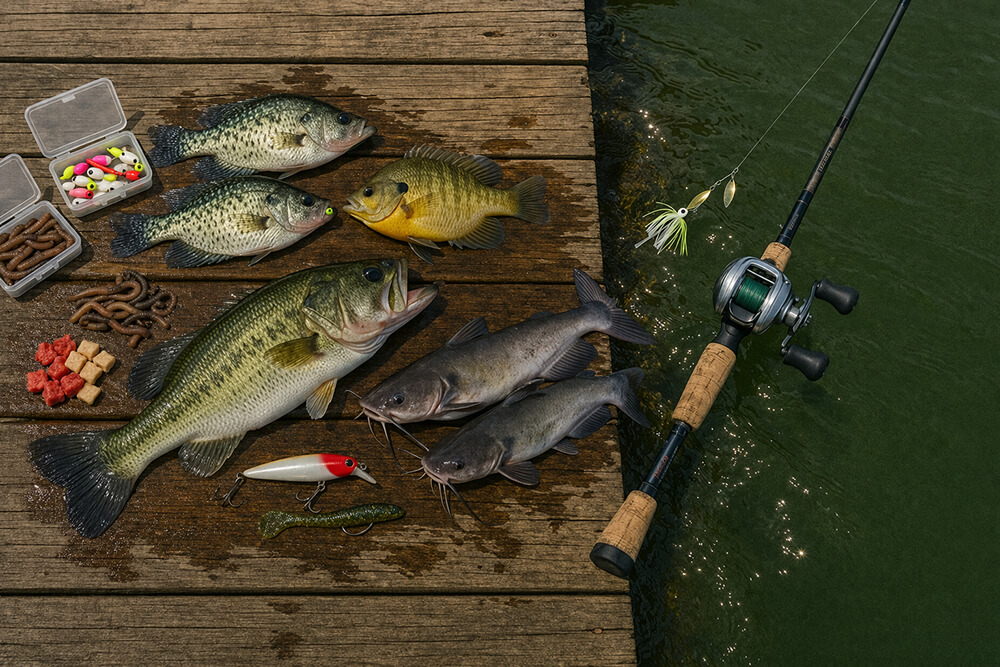
Common fish biting in Lake Greenwood during spring
- Largemouth bass (shallow movement ramps up, especially March and April)
- Crappie (often more consistent in spring)
- Bream and shellcracker (action improves as the water warms)
- Catfish (more active, especially on warming trends)
Where people usually start
- pockets in creeks
- docks with shade and depth nearby
- shallow cover that warms fast
Bait ideas
- For crappie, your internal post What’s the Best Bait for Crappie in Lake Greenwood? is a natural link here.
- For bass, many anglers rotate between moving baits to locate fish and slower soft plastics when they stop chasing.
March is typically one of the best “multi-species” months because bass and crappie are both in play, and catfish activity often improves on warm afternoons.
Summer (June to August): early, late, or deeper
Common fish biting in summer
- Catfish (often very steady)
- Bream (great for docks and shallow shade)
- Largemouth bass (more timing-dependent)
- Crappie (can be deeper and more pattern-based)
What most visitors notice
- The best bite windows are usually early morning and evening
- Midday success often comes from shade, deeper water, or slower presentations
Simple bait plan
- Bream: crickets or worms around shade lines
- Catfish: cut bait, stink bait, or live bait depending on your style
- Bass: topwater early, then slower baits around deeper docks and edges later
Fall (September to November): feeding season
Common fish biting in fall
- Largemouth bass (often more willing to chase)
- Crappie (can improve again)
- Catfish (still reliable)
- Bream (good until water temps drop)
Where to look
- wind-blown banks
- creek mouths and flats that have baitfish
- transition areas between shallow and deep water
Fall is a great time for covering water. If you want a trip-planning checklist for ramps, safety, and what to pack, link your internal post Planning Your First Lake Greenwood Fishing Trip: What You Need to Know.
Winter (December to February): fewer bites, but bigger rewards
Common fish biting in winter
- Largemouth bass (slower pace)
- Crappie (often deeper and more precise)
- Catfish (can still be caught, but patterns tighten up)
How most anglers adjust
- slow down
- fish deeper edges and stable structure
- focus on the warmest part of the day
What bait should I bring?” (quick starter list)
- Crappie: small jigs and/or minnows
- Bream: crickets or worms
- Catfish: cut bait or prepared catfish bait
- Bass: a moving bait plus one slower soft plastic option
This keeps you ready for whatever is biting without overthinking it.